
Author: BrandingSchool.NG
23/09/2026
Mafab 5G Exit: Nigeria’s Most Expensive Brand Lesson
- Market Watch, Leadership, Strategy
Imagine you told the whole market you were opening a restaurant. You printed the menus. You held the launch event. Journalists showed up. Excitement was real.
Then the guests discovered you had only five tables. Three of them had no chairs.
That is the Mafab 5G story.
In 2021, Mafab Communications paid $273.6 million to win a 100 MHz block in Nigeria’s inaugural 5G spectrum auction, becoming one of only two companies licensed to offer 5G services in the country. The name entered the market as a genuine player. Awareness was instant, purchased, and national.
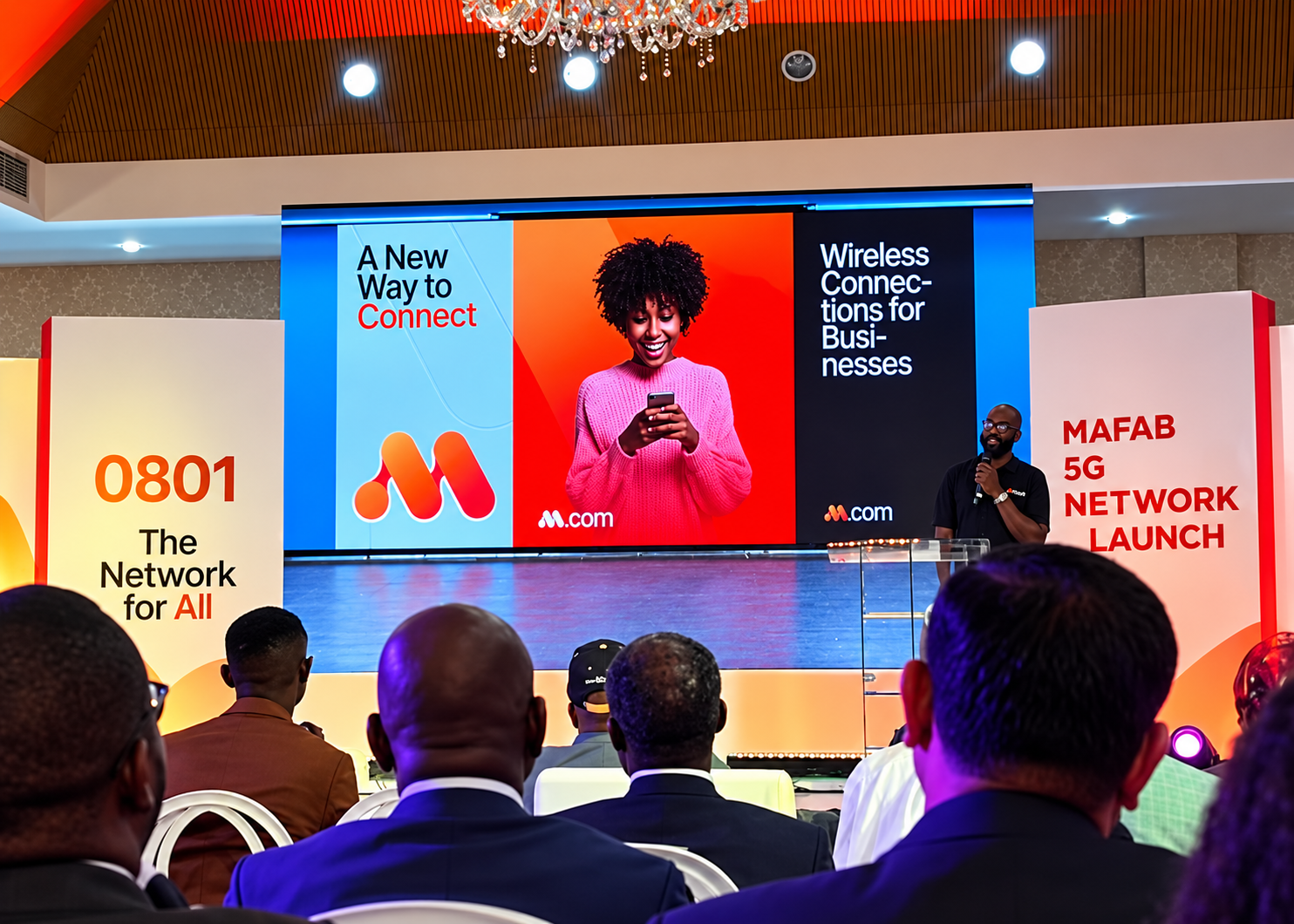
By January 2023, Mafab had launched commercial 5G services, backed by the kind of public events that tell a market something new has arrived. Nigeria officially had a second 5G operator.
By September 2026, Mafab was seeking Nigerian Communications Commission approval to transfer its entire spectrum holdings to MTN Nigeria, according to reporting by TechCabal and BrandSpur.
The restaurant is closing. MTN is buying the building.
What you are about to read is not a telecom story. It is a brand story. And if you run a business in Nigeria, this one is yours too.
Table of Contents
How the Mafab 5G Story Actually Unfolded
Mafab Communications did not stumble into Nigeria’s 5G market. They made a deliberate, expensive commitment to it.
In December 2021, during the NCC’s inaugural 5G spectrum auction, Mafab paid $273.6 million for its spectrum package, which included a 100 MHz block in the 3.5 GHz band and a 2×20 MHz holding in the 2.1 GHz band. At the time, only MTN Nigeria also won spectrum in that round, making Mafab one of just two licensed 5G operators in the country. It was a bold entry. The market acknowledged it.
The challenge began almost immediately.
Unlike MTN, which had spent decades building towers, wase stations, and nationwide infrastructure, Mafab had to construct everything from scratch. According to Technext24, the operator faced regulatory delays, difficulty connecting sites, foreign exchange pressures as the naira depreciated sharply, and rising equipment costs in the global market. None of these were minor headwinds. All of them compounded.
By the time Mafab launched commercial services in January 2023, after receiving a deadline extension from the NCC, the rollout was already limited. Coverage was focused on Abuja and Kano. Per ThisDay, the company had deployed only 15 network sites nationwide before running out of execution capacity.
Fifteen sites. For a national 5G operator.
The gap between the announcement and the actual infrastructure was not a technology problem. It was a brand problem. And it took five years for the full cost of that gap to become impossible to ignore.
The Mafab 5G Lesson: Awareness Has an Expiry Date
Here is something that gets lost in most conversations about brand building: Awareness is not a win. It is the beginning of a test.
When you enter a market and people notice you, all you have done is earned the right to be evaluated. The audience has said, “We see you.” What they have not said is, “We trust you.” And trust only comes through Experience, the second stage of the brand journey, the one that cannot be purchased or broadcast into existence.
How Brands Are Built: The Awareness, Experience, and Memory Framework lays this out clearly: Awareness is where the brand enters someone’s world. Experience is where it proves something real. Memory is where it lives permanently in that person’s mind. The sequence is fixed. You cannot buy your way from Awareness to Memory. You earn your way there through consistent delivery.
Mafab generated Awareness at the national scale. The NCC’s 5G auction was front-page business news. The January 2023 commercial launch added more signal. People knew Mafab existed as a 5G player in Nigeria.
But 15 network sites meant that almost no Nigerian could actually experience what Mafab had been communicating. The Awareness was real. The Experience was essentially non-existent.
When Awareness is not followed by Experience, one of two things happens. Either the audience forgets you, because your brand never made any real difference to their lives. Or they remember you as the company that promised something it never delivered. Invisibility is one outcome. Negative memory is the other.
Neither of them builds a brand. And you do not need to spend $273.6 million to fall into this trap.
What MTN Consistently Got Right
MTN Nigeria controls 51.3% of Nigeria’s mobile market. That number did not happen through better marketing alone.
It happened because, across every stage of the brand journey, MTN’s Experience kept pace with its Awareness. When MTN announced network expansion, towers appeared. When MTN announced data packages, the connectivity worked well enough for people to form habits around it. When they communicated 5G, there was genuine infrastructure behind the claim, built on decades of operational investment that already stretched across the country.
Their announcements were not running ahead of their delivery. They were confirming what was already being built.
This is the pattern that separates brands that compound from brands that collapse. It is not about the size of the initial investment. It is about the integrity of the sequence. You build the Experience before you broadcast the Awareness, or at the very minimum you build them in lockstep, so neither one gets too far ahead of the other.
MTN did not out-announce Mafab. They out-delivered them. And because delivery builds trust in a way that announcements never can, MTN ends up with Mafab’s spectrum. Consistent delivery earns more market. That is how it works, every time.
Your Business Is Running This Same Risk
You are probably not running a telecom company. You are not bidding in spectrum auctions. But you are running a brand, and the structural risk Mafab took is available to you at any scale.
Think about the last time you launched something before it was fully ready. A premium service tier you announced while you were still building the process behind it. A positioning statement that placed you in a category your operations could not yet consistently support. A new offering you promoted before your team had the capacity to deliver it at the level the price implied.
Every one of those gaps is a Mafab 5G situation in miniature. The Awareness is out there. The Experience is not yet ready to meet it. And while you are working on the delivery in the background, the people who encountered your Awareness first are forming their own conclusions about what your brand actually means.
This is why every solid brand is built on clarity before communication: you must know what you are genuinely able to deliver, and have the systems to deliver it consistently, before you start telling the market what to expect from you. Brand communication confirms delivery. It does not substitute for it.
The hard question for your business is not “am I generating Awareness?” Most business owners are reasonably good at generating attention. The harder question is: what does someone actually experience when they move from knowing your brand exists to genuinely interacting with it?
If the honest answer to that second question is weaker than your answer to the first, you are running the same structural risk Mafab ran. At a smaller scale. But with the same logic.
What Only a Brand Strategist Would Catch Here
Most people reading this story will take away one of two surface observations: MTN is dominant and getting more dominant, or building infrastructure in Nigeria is difficult and capital-intensive. Both are true. Neither is the brand insight.
The brand insight is this: Mafab’s failure was not primarily a capital failure, a regulatory failure, or an infrastructure failure. It was a brand architecture failure.
They bought their way into the Awareness stage. They announced their way into the Experience stage. And they never actually built either one in the right order.
The sequence matters more than the investment amount. Before you tell the market what you are, you must have built something real for people to discover when they arrive. Mafab reversed this. They told the market what they were, held the launch events, and could not deliver the experience those announcements implied.
You can purchase a license to occupy the Awareness stage. That is what the $273.6 million bought. You cannot purchase your way to the Experience stage. That has to be built, decision by decision, with the kind of patience and operational commitment that no campaign can replace.
MTN did not win this because they are bigger. They won because they are the only 5G brand in Nigeria that has genuinely earned the right to hold that spectrum. The NCC’s efficiency review is the formal mechanism. The real mechanism was five years of one brand delivering and one brand announcing.
If your brand is doing more announcing than delivering right now, that is the ratio to fix.
Not next quarter. Not after the next campaign. Now.