
STN Nigeria Just Got Licensed to Compete with MTN. The Brand Question Nobody Is Asking.
By BrandingSchool.NG
October 1, 2026
Advertisement
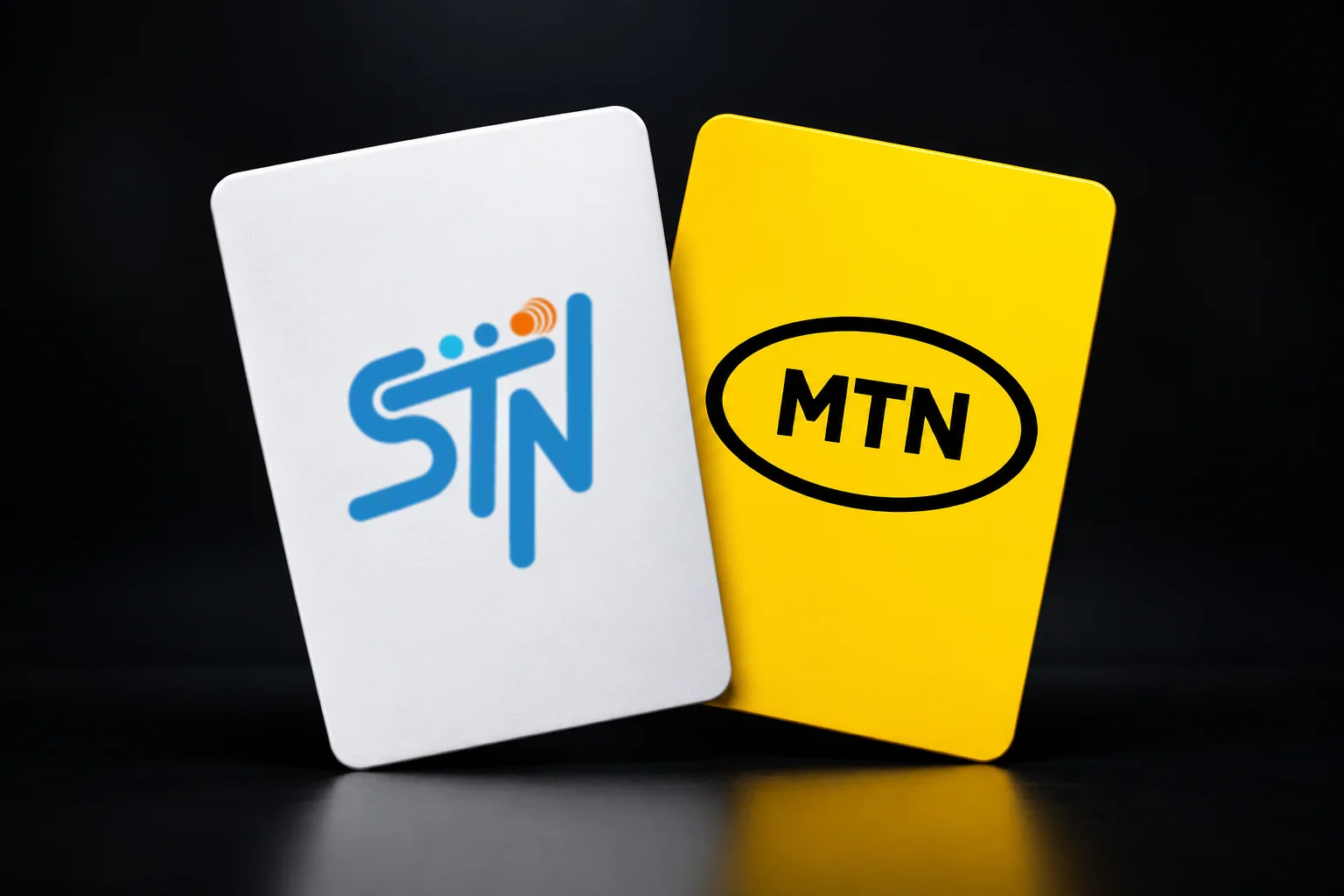
Imagine walking into a room where two people have been having the same conversation for twenty-five years. One of them accounts for more than half the room. The other holds another third. Between them, they have controlled nearly every exchange in that space since before most people in the room can remember.
Now imagine walking through that door and saying you are here to compete.
That is the room STN Nigeria just entered. On September 30, 2026, the Nigerian Communications Commission (NCC) granted Swift Telephone Network Limited, known as STN Nigeria, a Unified Access Service Licence (UASL), authorizing the company to offer fixed telephony, digital mobile, national long-distance, and international gateway services across Nigeria. The licence became effective October 1, 2026.
This is not a small milestone. STN Nigeria has been in existence since 1998, founded by the late Barr. Clara Adetuyi, initially operating as a calling center during the NUGA Games. By 2003, the company had become the first digital landline service provider in Yaba. That is a twenty-eight-year journey to get to this point. It is worth recognizing.
But getting to the licence is, in brand terms, arriving at the starting line.
Table of Contents
What the UASL Gives STN Nigeria and What It Does Not
A Unified Access Service Licence gives STN Nigeria legal permission to build infrastructure, offer services, and operate in Nigeria’s telecommunications market. It is the regulatory green light every aspiring competitor needs.
What it does not give STN Nigeria is awareness. Trust. A reason for someone to remove the SIM they have used for ten years and replace it with a new one.
What MTN and Airtel have that no licence can transfer is memory.
According to Nigeria Communications Week, MTN Nigeria now holds 100.86 million subscribers and 51.76% of the market. Airtel Nigeria holds 66.76 million subscribers and another 34.26%. Together, these two operators account for over 85% of every active SIM in Nigeria. Globacom holds 12.13%, and 9mobile holds 1.85%.
STN Nigeria enters this landscape with zero consumer recognition. That is not a criticism. That is the factual starting position of every new brand, including the ones that eventually become dominant. What matters is whether STN understands that starting position clearly enough to respond to it with strategy rather than ambition alone.
STN Nigeria’s Real Brand Challenge Is Memory, Not Coverage
Here is the psychology truth that most coverage of this story is not addressing.
A person who has used their MTN number for ten years did not merely sign up for a network plan. They registered their bank alerts to that number. Their children’s school has it. Their clients call them on it. Their landlord uses it to reach them when rent is due. Switching is not a rational cost calculation in that context. It is a disruption of memory embedded in every significant relationship in their daily life.
Brand theorists call this the switching cost. In Nigeria’s telecom market, the switching cost is unusually high because the brand is woven into the fabric of daily life, not just a service contract. STN Nigeria is not competing with MTN’s marketing budget. It is competing with the depth of mental real estate that MTN and Airtel have built over twenty years.
This is the same challenge you face if you are a small business owner trying to win clients who already work with an established competitor. You are not just fighting for market share. You are fighting for a place in someone’s memory that is already occupied. Understanding how brands are built through the Awareness-Experience-Memory journey is not a theoretical exercise in this context. It is the map you need.
What STN Nigeria Must Do Next to Build a Real Position
CEO Oluwole Adetuyi said this week: “This licence is not the destination. It is the bridge.” Director Yetunde Okafor framed the company’s ambition as building “a telecommunications company that is proudly Nigerian in its roots, global in its outlook.”
Both of these are the right kinds of statements for day one of a brand journey. But there is a distinction that matters.
“Proudly Nigerian” is a positioning seed. MTN is South African. Airtel is Indian. If STN Nigeria can make its Nigerian identity genuinely meaningful to consumers, it has the foundation of a distinct brand identity. But “proudly Nigerian” is a sentiment until it is backed by a specific experience that a specific group of people can feel. It becomes a position the day STN delivers something that no South African or Indian company has been able to replicate for a corner of the Nigerian market.
The brand strategy question STN Nigeria must answer is: which segment of this market has an unmet need the incumbents are too big, too slow, or too generic to serve? Which group of Nigerians has been using MTN or Airtel not because they love the experience, but because there was simply no other option they knew about?
That is the segment to go after first. Not all 195 million Nigerians. One specific group with one specific problem, served better than it has ever been served before. You can find the full framework for this kind of positioning in how to position your brand profitably in a market with big players.
The Lesson Your Business Can Take From This Right Now
You do not need to run a telecom company to recognize yourself in this story.
If you are a service business in Lagos, Port Harcourt, or Abuja competing against a firm that has been in the market for ten years, you are STN Nigeria. If you are a creative trying to win clients who already work with a bigger agency, you are STN Nigeria. If you are a food brand asking people to switch from the product they grew up with, you are STN Nigeria.
The lesson is the same across every industry: getting permission to operate is not the same as building a brand. A business registration, a professional certification, a licence, a new office, a new website: these are legal and logistical achievements. The brand work begins when a specific group of people knows you exist, experiences what you do, and carries that experience into memory.
STN Nigeria’s journey from calling center in 1998 to licensed national telco in 2026 is a genuinely remarkable institutional story. The harder story, the one that will determine whether this company becomes a brand Nigerians actually choose, begins today.
The bridge is real. What waits on the other side of it depends entirely on the brand clarity STN brings to the work ahead.
Filed under
Share this analysis
The Latest
Market Watch · Leadership · Strategy
October 26, 2026
Market Watch · Leadership · Strategy
October 26, 2026
Market Watch · Case Study · Strategy
October 23, 2026
Market Watch · Case Study · Leadership · Strategy
October 22, 2026
Keep reading
Market Watch · Leadership · Strategy
Somewhere in Lagos, Kano, or Port Harcourt, a POS agent woke up last week to news that the platform their
By BrandingSchool.NG
October 26, 2026

Market Watch · Leadership · Strategy
This is the NCC subscriber compensation story they are not writing about: it is February 2026, and you are somewhere
By BrandingSchool.NG
October 26, 2026
Strategy
By BrandingSchool.NG
October 26, 2026