Brand vs Branding: The Difference Every Owner Must Know
By BrandingSchool.NG
October 26, 2026
Advertisement

You paid for the logo. You printed the banner, set up the Instagram page, and posted every day for three months. Then one evening a friend forwards you a WhatsApp message from a group you are not in. Someone asked for a recommendation in your category, and someone else replied with your name and one line: “Their stuff is fine, but they never reply on time.” That moment is the clearest lesson you will ever get on brand vs branding. Everything you did for three months was branding. That one line in a WhatsApp group is your brand.
Most Nigerian business owners use the two words as if they mean the same thing, and the confusion is not harmless. It is the reason you can spend money every month on “branding” and still not know why customers are not coming back. It is the reason a new logo feels like progress and changes nothing. By the end of this piece you will know exactly what each word means, why the gap between them is where your growth is hiding, and how to measure that gap this week with nothing more than your phone.
Table of Contents
Brand vs Branding: The Short Answer
Here is the brand vs branding distinction in one breath. Branding is something you do. A brand is something people hold.
Branding is an activity. It is the act of communicating a brand, creating awareness around a brand, or designing experiences around a brand. It has inputs, outputs and outcomes you can evaluate, which means it can be planned, scheduled, budgeted for and improved.
A brand is the result. It is the awareness people have formed about you, the perception they hold, the experience they have had and the memory they carry. A brand lives in people, not in files.
So when you ask “how is my branding going?”, you are asking about your work. When you ask “how is my brand doing?”, you are asking about other people’s minds. Those are two different questions, and they need two different kinds of answers.
What Branding Is: The Work You Control
Think of every deliberate thing your business does to be seen, understood and experienced. The Instagram post is branding. The way your delivery rider greets a customer is branding. The packaging, the price list on your WhatsApp catalogue, the tone of your reply when someone complains, the speed of your refund: all of it is branding, because all of it is an attempt to shape what people think and feel about you.
That is good news, because branding is the part you control. You decide what to say, how to say it, how often, and what experience to design. You are the source of every branding activity.
But branding is communication, and communication only works when it is two-way. Every real branding activity has a source, a recipient and a means of feedback that you can measure. If you post every day and never check what people actually understood, you are not branding. You are broadcasting. And broadcasting is not the same thing.
This is where most small businesses lose the plot. They count the activity (posts made, flyers shared, adverts run) and never count the response. Activity without feedback is a monologue, and nobody builds trust with a monologue.
What a Brand Is: The Result You Do Not Own
Now look at the other side of the line. Your brand is not your logo, your colours, your website or your brand guidelines document. Those are expressions of a brand. They are tools for communicating it. The brand itself is what forms in the minds of the people who encounter you.
Which means, uncomfortable as it is, you do not own your brand. Your audience does. All you own is the experience you give them.
Scripture puts it plainly: “A good name is rather to be chosen than great riches” (Proverbs 22:1). A name is not something you can print. It is something other people say about you when you are not in the room. That is exactly what a brand is.
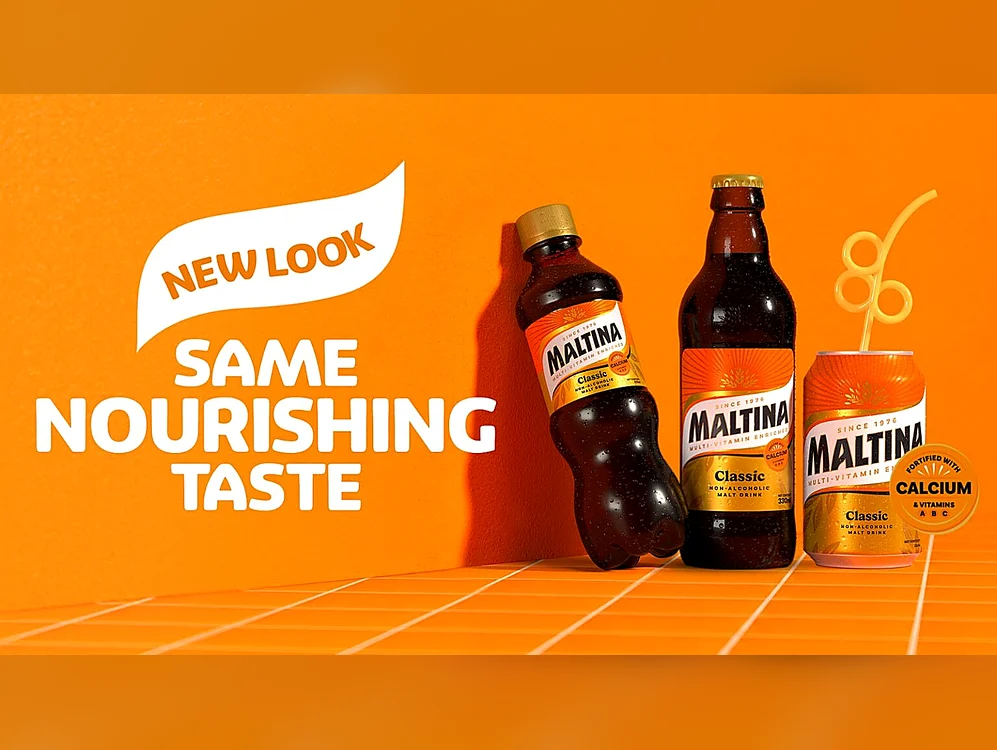
Consider what Nigerian Breweries did with Maltina this month. To mark 50 years, the company gave Maltina a stronger orange, enhanced gold accents, a gold crown cork and a “Since 1976” heritage mark across bottles, cans and PET packs, while keeping the taste unchanged. Every one of those packaging changes is branding: deliberate activity, controlled by the company. But the reason the company was careful to promise “same nourishing taste” is that the brand, the thing Nigerian families actually carry about Maltina after five decades, does not live on the label. It lives in memory. You can redesign a label in a quarter. You cannot redesign a memory. We looked at what the Maltina rebrand campaign reveals in more detail when it launched.
Why Confusing Brand and Branding Costs You Money
If the brand vs branding difference were only about vocabulary, it would not matter. It matters because the confusion sends your money and energy to the wrong place.
The Logo Trap
When you believe the logo is the brand, a rebrand feels like the fix for every problem. Sales are slow, so you change the colours. Customers are complaining, so you redesign the packaging. But if the experience behind the new look is the same, the perception will be the same, because perception is built from experience, not from decoration. A fresh logo on an old problem is still an old problem.
This is why BrandingSchool.NG insists that design is downstream of clarity. Positioning comes before expression. The foundation comes before the paint.
The Posting Trap
When you believe social media presence is the brand, you measure success in posts and followers. You can be on Instagram every single day and still have a brand that says “unreliable,” because the brand is being formed somewhere else: in the DM that took two days to answer, in the order that arrived late, in the WhatsApp group you will never see.
The channel is not the brand. Content without strategy is noise with a schedule.
The Response Trap
The third trap is the most expensive one, and it happens when a business forgets that the people talking about it are the brand. In 2023, Lagos entrepreneur Chioma Okoli posted on Facebook that she found Erisco’s Nagiko tomato mix too sweet, and, as CNN reported, she was arrested days later and charged. Erisco said it was defending its reputation because the comments had led some suppliers to disassociate from the company. Whatever the courts decide, the response itself became branding, loud and national, and it shaped what millions of Nigerians now associate with the name. We unpacked that story when it first broke in our piece on the Erisco tomato paste review.
The lesson is not about one company. It is about you. Every response to feedback is a branding activity, and it either repairs the perception in people’s minds or deepens the damage.
The Gap Between Your Branding and Your Brand
Here is the idea that makes brand vs branding practical rather than academic. There is always a gap between what you intend (your branding) and what people actually hold (your brand). The size of that gap is the single best measure of how well your branding is working.
Human psychology explains why the brand vs branding gap exists. People do not form impressions from your intentions. They form them from consistent, repeated stimuli: what they see, what they experience, and what they hear from people they trust. In Nigeria, word of mouth is still the most powerful trust channel, which means much of your brand is being formed in conversations you are not part of. If your messages say “premium” and your service says “manageable,” people will believe the service every time.
This is also why every brand begins in the same place. At BrandingSchool.NG we teach that brands move through three stages: Awareness, then Experience, then Memory. You can read the full breakdown of how brands are built in the mind, but the short version is this. Your branding can create awareness quickly. Only experience, repeated consistently, turns that awareness into memory. And memory is where loyalty, referrals and pricing power live.
Trust follows the same logic. Every brand begins as a suspect: unknown, unproven, unverified. The work of branding is moving people, one person at a time, from suspect to trusted. Paystack is a useful picture of what that looks like when it is done well. It set out to solve one specific problem, making it easy for Nigerian businesses to accept payments online, and kept delivering on it until the perception in the market matched the promise. By the time Stripe announced its acquisition of Paystack in October 2020, in a deal TechCrunch’s sources put at more than $200 million, the company had already been nicknamed “the Stripe of Africa.” That nickname is not branding. It is a brand: a stored belief in other people’s minds, earned by doing the same thing well for long enough.
Closing the gap is a leadership job. Building a brand means leading people from not knowing you, to knowing you, to trusting you, to choosing you, to recommending you. Leaders do not change direction every month. A business that is premium in January, discounting in March and “doing everything” by June is not leading anyone anywhere. That is what we call a diffuse brand: busy, reactive, and confusing to the very people it needs to persuade. A defined brand knows what it is building, so every branding activity points the same way and the gap keeps shrinking.
A 7-Day Exercise to Measure Your Brand vs Branding Gap
You do not need an agency or a survey tool to measure your own brand vs branding gap. You need a notebook, your phone and the honesty to read what comes back.
Days 1 and 2: Write Down Your Branding Intent
Write three words you want customers to associate with your business. Not words that sound nice. Words you are deliberately working toward, such as “fast,” “reliable” or “premium.” Under each word, list the specific things you currently do to earn it. If you cannot list at least two concrete actions under a word, that word is a wish, not a strategy.
Days 3 to 5: Ask Ten Customers for Their Words
Send a short, personal WhatsApp message to ten recent customers. Not a broadcast. A message with their name in it. Ask one question: “If a friend asked you about us, what three words would you use?” Then ask one follow-up: “What is one thing we could do better?” Thank everyone, whatever they say. Do not defend, explain or correct. You are collecting data, not winning an argument.
If ten feels like a lot, start with five. What matters is that the answers come from people who have actually experienced you, not from people who only follow you.
Days 6 and 7: Compare, Then Change One Thing
Put your three words beside theirs. Where they match, you have a brand that is forming the way you intended, so protect whatever is producing it. Where they do not match, you have found the gap. Trace each mismatch back to a specific touchpoint: reply time, delivery, packaging, how complaints are handled, how your price is presented. Then change one thing, only one, and run the same ten-message check again in 60 days.
That is branding with a feedback loop. It is measurable, it is repeatable, and it is the difference between hoping your brand is improving and knowing it is.
Brand vs Branding: Where to Go From Here
The difference between brand vs branding comes down to who holds the pen. You write your branding. Your customers write your brand. The work of a business owner who wants to grow steadily is to keep those two stories as close together as possible, and to measure the distance honestly.
So stop asking whether your logo is good enough or whether you posted enough this week. Start asking what the people who have experienced you would say about you in a group chat you will never see, and whether that matches what you are trying to build.
Do the seven-day exercise this week. Then, to turn what you learn into a structure you can build on, read The Three Cardinals of Every Solid Brand, which shows how your brand core, positioning and expressions fit together so your branding stops pulling in different directions.
Your branding is the work. Your brand is the verdict. Do the work in a way that earns the verdict you want.
Filed under
Share this analysis
The Latest
Market Watch · Leadership · Strategy
October 26, 2026
Market Watch · Leadership · Strategy
October 26, 2026
Market Watch · Case Study · Strategy
October 23, 2026
Market Watch · Case Study · Leadership · Strategy
October 22, 2026
Market Watch · Culture · Strategy
October 15, 2026
Keep reading
Market Watch · Leadership · Strategy
Somewhere in Lagos, Kano, or Port Harcourt, a POS agent woke up last week to news that the platform their
By BrandingSchool.NG
October 26, 2026

Market Watch · Leadership · Strategy
This is the NCC subscriber compensation story they are not writing about: it is February 2026, and you are somewhere
By BrandingSchool.NG
October 26, 2026
Market Watch · Case Study · Strategy
At the end of October 2026, Maltina marked half a century in the Nigerian market with a visual identity refresh.
By BrandingSchool.NG
October 23, 2026