NAFDAC Fake Products List: What It Means for Brand Trust in Nigeria
By BrandingSchool.NG
October 27, 2026
Advertisement
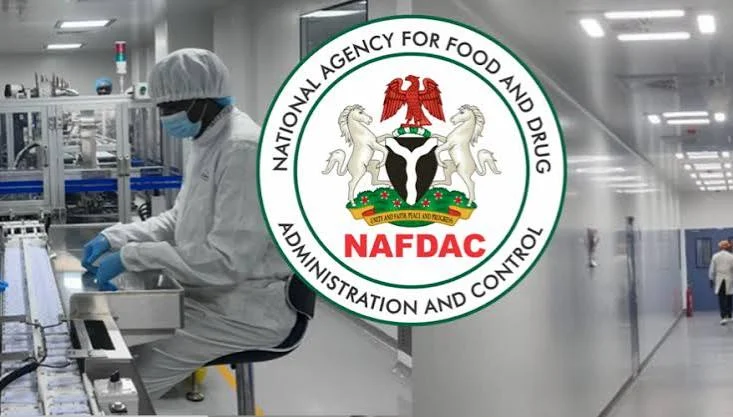
Imagine picking up your phone and finding this in your family WhatsApp group: “NAFDAC has released a list of fake products. Please share for awareness.” You scroll through. Cowbell. Peak Milk. Coca-Cola. Fanta. Rice brands you buy every week. Medicines sitting in your bathroom cabinet. Your stomach drops. You screenshot it. You pass it on.
That is exactly what happened across Nigeria in early October 2026. A viral NAFDAC fake products list spread through social media and WhatsApp groups, naming some of the country’s most recognised consumer brands as fake, counterfeit, or unsafe. And almost nobody stopped to ask: did NAFDAC actually release this?
The answer, it turned out, was no.
Table of Contents
What the NAFDAC Fake Products List Actually Was
Around October 5 to 6, 2026, a list began circulating on Nigerian social media claiming to be an official NAFDAC release. The list named brands including Cowbell, Peak Milk, Coca-Cola, Fanta, Sprite, Schweppes, Lacasera, Hollandia Yoghurt, and rice brands including Big Bull, Cap Rice, and Stallion. It also included medicines such as Postinor-2 and Noristerat, along with cosmetics. The framing was alarming: these products were being presented as unsafe for Nigerian consumers.
NAFDAC’s Resident Media Consultant, Sayo Akintola, responded directly and unambiguously: “For the avoidance of doubt: the viral list did not emanate from NAFDAC.” The agency further clarified that it does not declare any product fake or counterfeit without investigation, laboratory sampling, and scientific verification. No such comprehensive list had been issued.
What the circulating post actually contained, as verified by Pulse Nigeria’s fact-check, was a compilation of real but decontextualised NAFDAC actions spanning 2022 to 2025. These included batch-specific counterfeit alerts for particular sachets or product variants, targeted enforcement operations in specific markets, and product recalls for specific quality issues. None of these applied to entire brand names in a sweeping, current government warning. A counterfeit alert for a particular batch of Cowbell “Our Milk” sachets is not a declaration that all Cowbell products are fake. But stripped of that context and packaged into one alarming list, that distinction vanished entirely.
By the time NAFDAC’s clarification was carried by Tribune Online, The Whistler, and PM Parrot, the list had already completed its circuit through millions of Nigerian phones.
The Brand Signal Hidden Inside the NAFDAC Fake Products List
Every branding exercise sends a signal, whether you intend it or not. The NAFDAC fake products list sent one too, and it came from a source that none of the named brands had any control over.
The signal was this: some of Nigeria’s most established consumer brands cannot be trusted.
Now think carefully about what that means. Brands like Coca-Cola, Peak Milk, and Cowbell have spent decades building awareness, creating consistent consumer experiences, and earning a place in the memory of Nigerian households. They have moved through the full brand journey: from the awareness stage where they fought for shelf space and recognition, through the experience stage where they built habits and preferences, all the way to the memory stage where consumers reach for them without deliberation. That is the full arc of how brands are built through the Awareness-Experience-Memory journey. And a single viral list threatened to unsettle a portion of what took decades to build.
The signal itself was false. But signal reception does not require authenticity. It requires a familiar, trusted source. And the list borrowed one: NAFDAC’s name.
Every Nigerian who has ever seen a NAFDAC registration number on a product, or heard NAFDAC issue a recall warning, carries a mental association. NAFDAC equals regulatory authority. NAFDAC equals consumer protection. When a list appeared to originate from NAFDAC, the mind activated its trust shortcut: credible source equals credible claim. That is not careless thinking. That is human psychology operating exactly as it is designed to.
Why Memory-Stage Brands Face a Specific Kind of Threat
There is a counterintuitive truth about brands that have already earned deep trust: they carry a specific vulnerability that newer, less established brands do not.
A small, unknown business cannot be meaningfully harmed by a viral list naming it as fake. Nobody has heard of it yet. Nobody holds strong feelings about it. There is no established trust to destabilise, so there is no lever to pull.
But Cowbell has been in Nigerian homes for decades. Peak Milk is woven into how a generation of Nigerians grew up. Coca-Cola is arguably the most globally recognised consumer brand in existence. When you name these brands in a damaging context, you are not introducing a new idea into an empty space. You are attacking a memory. And memories, once shaken, require active reconstruction.
This is the specific threat that the NAFDAC fake products list posed to Memory-stage brands: it did not have to convince anyone that these brands were dangerous from the beginning. It only had to create enough doubt to disrupt automatic trust. That is a much lower bar.
The consumer who used to reach for Peak Milk without a second thought now pauses for a fraction of a second. The pause may be brief. It may not even translate into a changed purchase decision. But the pause is the brand damage.
What This Means for Your Small Business Brand
If you run a food business, a consumer health product, or any product that ends up in Nigerian homes, you may be reading this and thinking: this is a problem for big companies with big marketing budgets. Not for me.
That instinct is wrong. The principle operating in this story governs your brand at whatever scale you are currently working.
You are building toward trust right now. Every piece of content you produce, every service experience you deliver, every order you fulfil correctly, every complaint you handle honestly is a step in that direction. You are building the same kind of equity that Cowbell and Peak Milk hold. Just at a smaller scale and at an earlier stage of the journey.
What the October 2026 viral list reveals is that brand equity, at any scale, does not protect itself. The consumer brands named on that list had done nothing wrong. They did not produce the counterfeit products that triggered those old NAFDAC batch alerts. They did not publish the viral list. But their names were on it, and the damage travelled anyway.
For your business, the practical implication is this: trust is not a bank account you fill up and then stop managing. It is a relationship you tend continuously. The moment a claim about your brand starts circulating in someone’s WhatsApp group, the depth of trust your existing customers carry determines whether they verify it before sharing it or pass it on without thinking.
The solid brand is built on a foundation that makes that protective instinct automatic in the people closest to it. To understand what that foundation looks like structurally, the three cardinals of every solid brand give you the framework: Brand Core (what your brand genuinely stands for), Positioning (the specific place you occupy in your audience’s mind), and Expressions (how that shows up consistently at every touchpoint). A brand built on those three components will have an audience already predisposed to question a negative claim before amplifying it.
That is the difference between a brand the lie slides off and one it sticks to.
The One Insight Only a Trained Brand Strategist Would Catch
Here is what most people are missing in the conversation around this story.
The NAFDAC fake products list worked because NAFDAC is a trust institution. Its credibility, built through decades of enforcement presence and regulatory action, gave the viral list its power to spread. Without NAFDAC’s name and implied authority, that post would have been dismissed as another random social media rumour. Nobody would have forwarded it to their mother.
This is what happens when trust becomes infrastructure: it also becomes a target.
NAFDAC’s name was not exploited because NAFDAC is weak. It was exploited precisely because NAFDAC is trusted. The stronger the trust institution, the more valuable its name becomes as a legitimising force for false claims. Disinformation does not travel on its own authority. It borrows the authority of things people already believe.
The strategic lesson goes beyond this single incident. Many businesses actively pursue third-party credibility: NAFDAC registration, ISO certification, SONCAP approval, endorsements from known figures, associations with established brands. These are genuinely valuable. They carry real weight with audiences, and they should be pursued.
But they are also transfer points. When a trusted third party has its name misused or its credibility challenged, that challenge can follow the association back to your brand. This does not mean you should avoid certifications or endorsements. It means your brand’s direct relationship with its own audience matters more than any authority it borrows.
The brands that weathered the NAFDAC viral list best were the ones whose customers had accumulated enough personal experience with the product that the list created cognitive dissonance rather than confirmation. They did not believe it because their experience said otherwise. That direct, personal, experience-based trust is the only kind no viral list can take from you, provided you have actually built it.
The goal is not to be a brand people recognise. It is to be a brand people defend.
Build the brand that makes the lie feel wrong, not just unlikely.
If you want to build that kind of brand from the ground up, start with the fundamentals at BrandingSchool.NG.
Filed under
Share this analysis
The Latest
Market Watch · Culture · Leadership · Strategy
October 27, 2026
Market Watch · Leadership · Strategy
October 26, 2026
Market Watch · Leadership · Strategy
October 26, 2026
Market Watch · Case Study · Strategy
October 23, 2026
Keep reading

Market Watch · Culture · Leadership · Strategy
In May 2025, a musician known as Portable took to social media with a complaint that made First Bank of
By BrandingSchool.NG
October 27, 2026
Market Watch · Leadership · Strategy
Somewhere in Lagos, Kano, or Port Harcourt, a POS agent woke up last week to news that the platform their
By BrandingSchool.NG
October 26, 2026
Market Watch · Leadership · Strategy
This is the NCC subscriber compensation story they are not writing about: it is February 2026, and you are somewhere
By BrandingSchool.NG
October 26, 2026